Sales Call Anxiety Gets Worse After You Get Good
Key Points
Consistent action isn't built through willpower or better habits. It's what naturally happens when the interference slowing your cycle time is removed.
Cycle time is the distance between deciding and doing. Most founders have never measured it. That measurement is where the revenue leak becomes visible.
Long cycle times run quietly. Revenue doesn't collapse. It holds still while effort stays high, and the gap between current and target widens invisibly.
This shows up three distinct ways: the Tuesday Idea Loop, the Waiting to Be Ready pattern, and the Draft That Never Posts. Most people recognize at least two.
The same pattern recognition that built your business is now slowing it down. That's not a character flaw. It's a pattern. And patterns can be resolved.
You've practiced the price in the car, in front of the mirror, out loud to a friend. It sounds clean. Then you get on the call with that client you actually want, and your voice does something you didn't tell it to do.
A fraction. A half-step. The word "typically." An explanation for a price nobody questioned. Two seconds that cost you hours of replaying the call.
This is what sales call anxiety looks like at your level. Not the version that shows up before you have any proof. The version that morphed when the proof came in.
If it's costing you $500 to $1,000 on just two calls a month, that's $12,000 to $24,000 a year. Not from a weak offer. From a hesitation that started to feel like who you are.
This Is Not a Confidence Problem
You have confidence. You get things done. You follow through. You deliver. The hesitation isn't spread across your work. It clusters in one specific place.
It shows up before the calls where someone is going to evaluate whether you're worth the number you're presenting. That's the fingerprint. Sales call anxiety at your level isn't about selling. It's about being assessed.
This is also why fear of being visible and sales call anxiety tend to show up together. Different surface. Same root. Both are triggered by evaluation, not by action itself.
The block doesn't hit before every call. It hits before the bigger ones, the higher numbers, the prospects whose own credibility makes the evaluation feel like it counts more. That's important. A block that selective isn't a personality trait. It's identifiable.
The Private Accounting Nobody Admits To
Somewhere in your accounting of your own success, luck is doing more work than you want to admit out loud.
Not dramatically. Not consciously. Just quietly, in the background, running a file that says: for now. I got lucky again. This is just for now, while I have them fooled.
Your clients aren't lying to you. The testimonials are real. The renewals happened without prompting. And yet every piece of evidence gets filed under "for now" instead of updating the number. The compliment lands. You receive it graciously. The file doesn't move.
This is why more proof widens the gap instead of closing it. Now there's more to live up to. More distance between the version pretending on the call and the version you're not entirely certain you can be. Succeeding at your level doesn't dissolve this. It makes it more precise. The doubt gets quieter but more targeted. It shows up on the calls that matter, not everywhere.
That's the thing nobody says clearly enough. The proof isn't stored where evidence can reach it.
What the Avoidance Sounds Like When It's Had Time to Practice
It stopped saying "I'm scared" years ago.
Now it says: the intake process needs one more refinement. The case studies aren't current enough for this particular prospect. The messaging isn't quite right for this conversation. Every one of those sounds like a professional making considered decisions. Every one of them is doing a different job than it claims.
This is also where underearning and sales call anxiety connect. The block that softens the number on the call is the same one that kept the number lower before the call. They're not separate problems. They're the same block at two different stages.
Think about the last warm lead you didn't follow up with. Not the reason you told yourself. The one underneath that. Notice how responsible it sounds. Notice how much it sounds like reading the situation clearly rather than someone who felt, underneath the professional assessment, that making that call carried a risk they weren't ready to absorb.
A Real Example of How This Runs
Stella had clients who renewed, referred, sent the kind of emails you don't delete. Her rates weren't the problem. She had not made an outbound call in four months.
She had a list of warm contacts who had asked to be kept in the loop. When I asked why she hadn't called them, she told me with complete composure that she wanted to refine her intake process first. Smooth. Practiced. She believed it.
The last discovery call she'd actually been on, she signed the client. She also spent the next two weeks reviewing what she should have said differently at the number. Not a call that went badly. A call that went fine, and still left her reviewing her own footage.
She was keeping a private file that said: " You've been lucky so far.” That file was running her calendar. Every time she looked at her outreach list, her brain said not yet, fix this first. That last part wasn't even a conscious thought. She just felt it.
Four months of intake refinement was protecting her from one half-second on a call she already knew how to run.
Why Understanding This Has Not Been Enough
The journaling didn't fail. The coaching didn't fail. None of it failed. It worked exactly as it was designed.
It just wasn't designed for this.
Everything you've done to fix sales call anxiety worked on your understanding of it. And the understanding is excellent. You know what the block looks like. You can name it the moment it arrives. You understand it completely.
And then you get on the call and the program runs anyway.
Because understanding it and the thing running on the call are two different events happening in two different places. You've been working very hard in the right building on the wrong floor. That's not a failure of effort or insight. It's a mismatch between the tool and the location.
Most people never fix this because they never calculate it. They call it nerves, a confidence issue, a personality thing. They file it under "something to work on eventually." Eventually arrives and the leads are still on the list. The call they should have made is still unmade.
You don't need more insight. You've got enough.
That's what I do.
Frequently asked questions
How is this different from regular imposter syndrome?
It's often not different. Sales call anxiety is frequently a form of imposter syndrome, just the version that gets more targeted after you have proof. But it's also commonly a combination of blocks. Imposter syndrome mixed with self-sabotage. Imposter syndrome layered with perfectionism. All of those can show up as hesitation on a sales call, and they look similar from the outside. That combination is what makes it specific to you, and it's worth identifying which blocks are actually running before assuming it's any one thing. That's what the calculator question is designed to surface.
I've tried mindset work and it hasn't moved this. Why would this be different?
Mindset work updates your thinking. This block isn't stored where your thinking lives. That's not a criticism of the work you've done. It went to a real address. It just wasn't the right one for this particular problem.
Does this get better on its own with more experience?
For most people at this level, no. It morphed when the evidence came in instead of dissolving. More experience tends to make it more targeted, not smaller. The calls it shows up on get more specific and more expensive.
I recognize this pattern. How do I know which block is actually driving it?
The calculator gives you your revenue cost and asks one question to identify which block is running. That's what your email gets you. A better understanding of what's actually behind the hesitation, which is usually more specific than it looks from the outside.
Is this coaching or therapy?
It's specialized execution block work with established service providers. The entry point is the calculator. If you want to talk through what you find, a clarity call is the next step from there.
How long does it take to see a shift?
Faster than most people expect. The signature program is 90 days. Most clients notice something different after the first Reset session.
Suggested Reading in This Series
Fear of Success is often a creative mix of blocks getting in your way. Here are a few blogs that may be helpful for you to identify what’s got you stuck.
About Jennie Hays | Execution Block Specialist
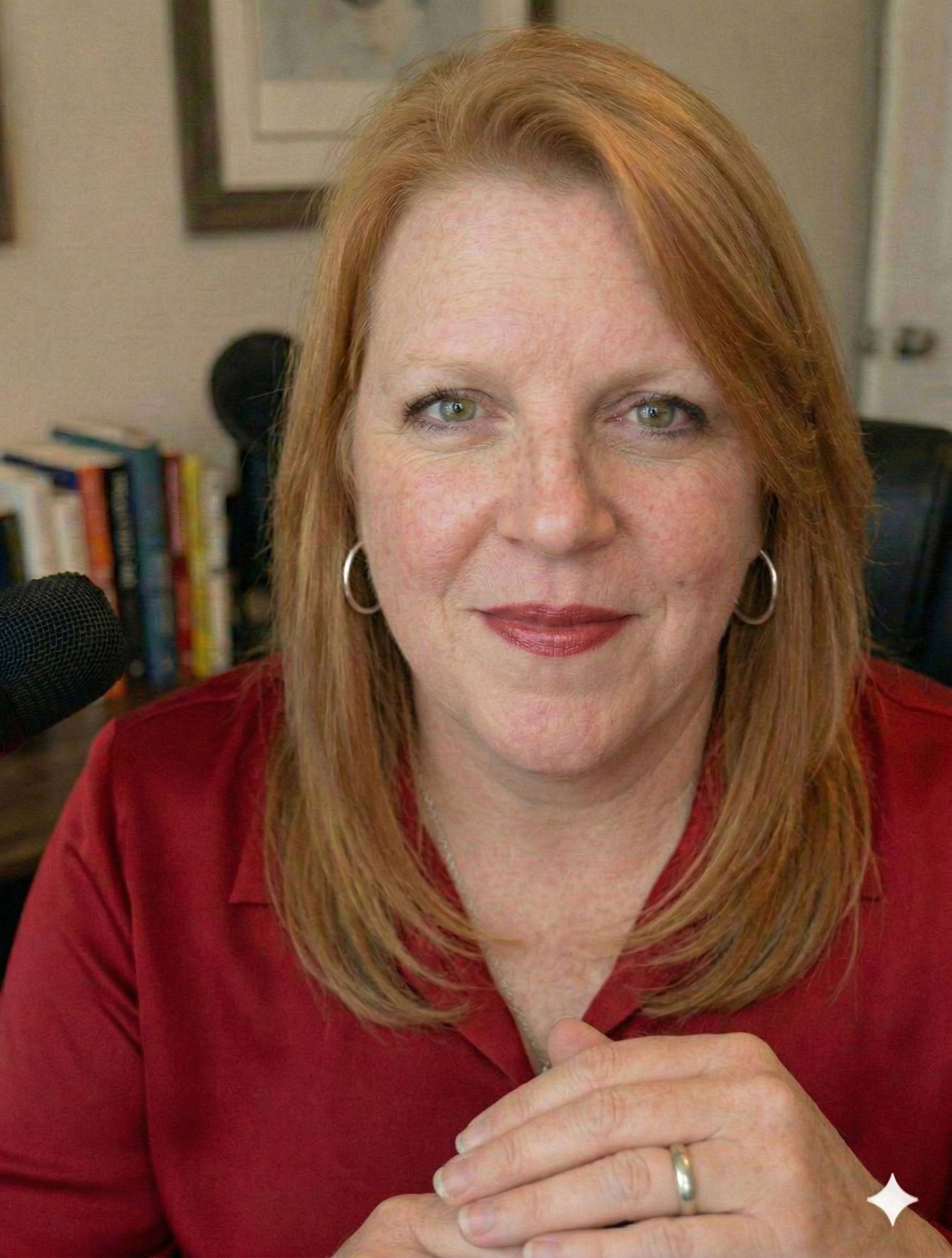
Jennie Hays is an Execution Block Specialist who works with entrepreneurs stalled at their next level. Her clients don't lack strategy. They're blocked from executing it and that gap has a measurable dollar cost.
Through Rapid Block Resolution, Jennie identifies the specific internal interference slowing execution, removes the friction attached to it, and restores consistent forward movement. She solves the right problem first and builds independence, not dependency.
Because once the block is resolved, execution becomes natural.
Learn more at jenniehays.com | Calculate what your stall is costing you at jenniehays.com/calculator