

You’re not shut down. You’re frozen in one very specific place.

You answer emails. Serve clients. Handle emergencies. Make dinner. Solve everybody else’s problems. Keep the business running.
And then there is that one thing.
The page. The pitch. The follow-up. The launch. The pricing change. The marketing task.
You know what needs to happen. It may not even be particularly complicated. But somehow you cannot seem to start it, return to it, or finish the next step.
You are clearly capable of working. Your ability to execute just changes around this one thing.
Book a Call with Jennie to Find Out What’s Keeping You FrozenWe’ll SCAN the problem for Strategy, Clarity, Alignment, and what happens when you actually try to execute.
Capable everywhere else. Stuck right here. Again.
Functional freeze is not an inability to function.
That is exactly what makes it confusing.
You can do plenty.
Sometimes you can even do harder things than the task you keep avoiding.
The useful question is:
What changes when you approach this particular action?
Functional freeze describes what execution is doing.
It does not automatically tell us why it is happening.
Functional freeze tells us where execution is stopping. SCAN helps us figure out why.
Before assuming something deeper is interfering, we look at the strategy, the clarity of the action, and whether the way you are trying to execute actually fits.
Should you actually be doing this?
The action may belong to a strategy that no longer makes sense, does not fit the goal, or will not produce the result you actually want.
Is the next action truly executable?
Knowing the goal is not the same as knowing the next step. The task may be too large, vague, poorly sequenced, or dependent on information you do not have yet.
Does the way you are trying to do it actually fit?
The workflow, cadence, platform, expectation, timing, or method may not fit you, your business, your strengths, or your actual circumstances.
What happens when it is time to act?
If the strategy makes sense, the next action is clear, and the way of executing fits, but this specific action still repeatedly stops, there may be an Underlying Block.
If this task were replaced with something equally difficult but emotionally neutral, would I still be unable to do it?
If the answer is no, the selectivity matters.
Then we SCAN what is different about this action.
The rest of the day can look completely normal.
The follow-up you cannot send
You communicate with people all day. But the referral, sales follow-up, introduction, or opportunity sits unanswered.
The page you cannot reopen
Most of the project is done. You know the next edit. Yet days or weeks pass without reopening the file.
The marketing action you keep skipping
Client work gets completed. Admin gets handled. Other content gets created. The one visibility action keeps disappearing from the day.
The task you can explain perfectly
You know what needs to happen. You could probably explain the steps to somebody else. Knowing has not turned into doing.
You can dislike an action, feel nervous about it, and still execute it.
Growth can be uncomfortable.
Publishing can feel vulnerable. Asking can feel awkward. Raising a rate can feel strange. Trying something new can feel uncertain.
None of that automatically means you have an Underlying Block.
If you feel discomfort and still do the thing, that is discomfort. If execution repeatedly breaks down around the same specific action, that gives us a pattern worth investigating.
SCAN helps us determine whether the problem is Strategy, Clarity, Alignment, or an Underlying Block. You can read more about how I distinguish those possibilities in my guide to Execution Blocks .
Selective execution gives us useful information.
You may be able to work, think, solve problems, meet deadlines, support clients, and execute elsewhere.
Then you reach one particular action and everything changes.
The point is not to decide that you lack discipline.
The point is to ask what changes at that location.
Maybe the strategy is wrong. Maybe the next action is not clear. Maybe the way you are trying to do it does not fit.
And if those things are workable but the freeze remains, there may be an Underlying Block.
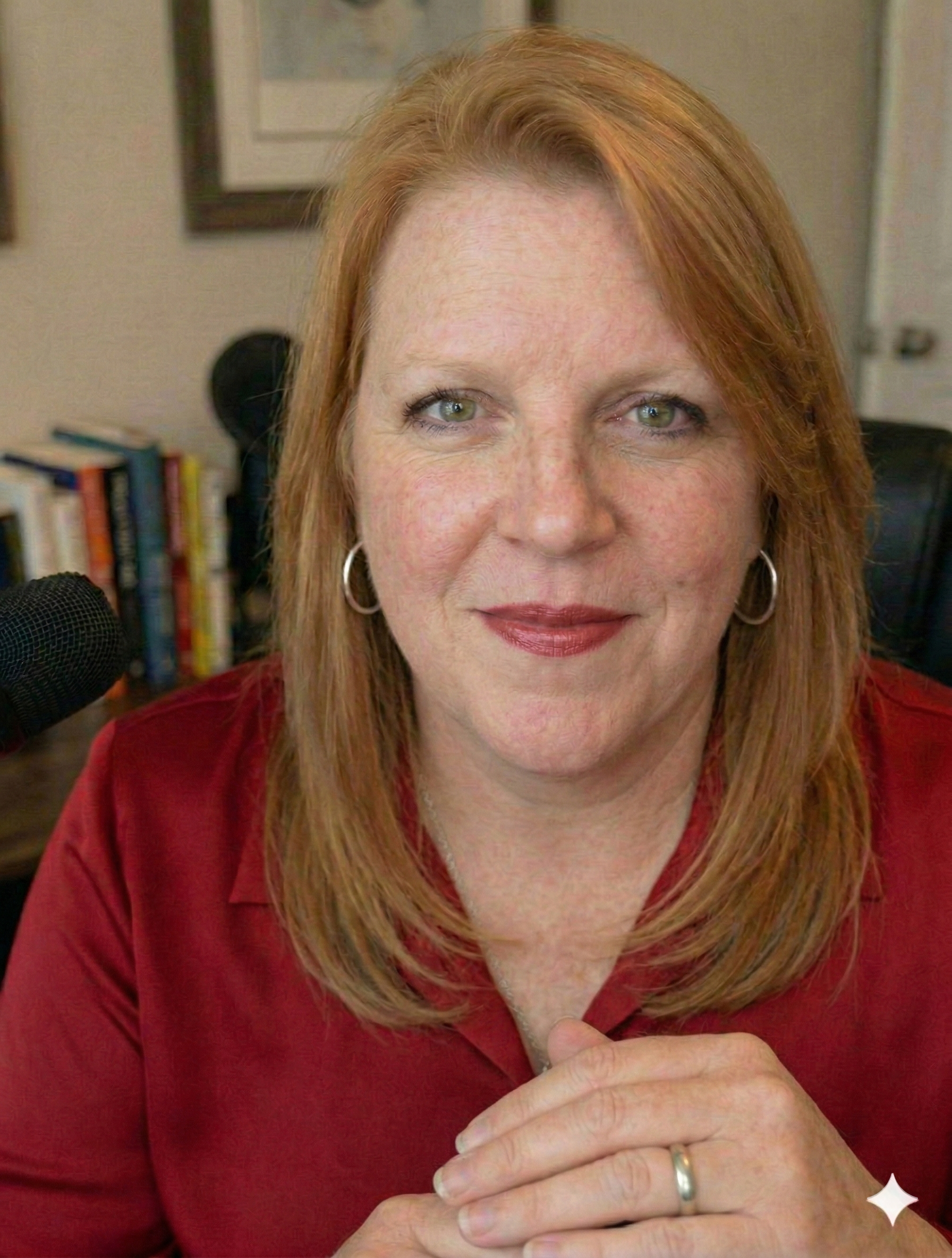
I help you figure out why your ability to execute changes around one specific thing.
I’m the Execution Block Specialist , a Brainspotting Practitioner, and business coach for coaches, consultants, service providers, and entrepreneurs.
My job is not to assume every difficult action has something deeper behind it.
Sometimes the strategy is wrong.
Sometimes you do not actually have a clear next action.
Sometimes the way you are trying to execute does not fit you or your business.
And sometimes those practical pieces all make sense, but your ability to execute still changes around a very specific action.
That is when an Underlying Block becomes useful to investigate.
I spent 25 years in emergency medicine, where identifying what is actually happening matters more than treating everything that looks similar as the same problem.
Make the action executable. Then address whatever still stops it.
SCAN helps determine whether the freeze needs Strategy Alignment or whether an Underlying Block is still interrupting execution.
When the practical pieces work and execution still selectively stops.
If the strategy makes sense, the next action is clear, and the way you are trying to execute fits, but the same specific action remains unusually difficult to approach or complete, there may be an Underlying Block.
Brainspotting is one of the tools I may use when deeper block work is what remains.
When the task or execution method needs to change.
Sometimes functional freeze gets dramatically easier when the strategy changes, the next action becomes specific, the workflow gets simpler, or the method is adapted to fit how you actually work.
The goal is not to force you through a badly designed task and call resistance the problem.
The one thing stops being the place where execution dies.
The task no longer needs three days of negotiation before you can touch it.
A pause does not turn into another month of leaving the project untouched.
The action may still feel uncomfortable without that discomfort determining whether it happens.
Your ability to get things done finally reaches the action that kept staying untouched.
Not a dramatic breakthrough. A change in what you can actually do.
“I know exactly what I need to do.”
But the file stays closed, the email stays unsent, or the next step keeps rolling into tomorrow.
The task becomes ordinary again.
It may not become fun. It may not become comfortable. It simply stops carrying the same amount of friction.
“I just did it.”
That is the result I care about: the action happens without requiring the same prolonged internal fight first.
Questions about functional freeze, selective execution, and getting moving again.
What are the symptoms of functional freeze?
Functional freeze can look like continuing to handle normal responsibilities while feeling unusually unable to start or return to one specific task or area.
In business, you may still serve clients, answer messages, manage your household, and solve other problems while one important action remains untouched.
The selectivity is useful information.
Functional freeze describes what execution looks like. SCAN helps determine why it is happening.
How do I get out of functional freeze mode?
Start by identifying the exact action where execution stops.
Then SCAN it.
Does the strategy make sense? Is the next step actually clear? Does the way you are trying to execute fit you and your business?
If changing one of those pieces gets execution moving, address that problem directly.
If Strategy, Clarity, and Alignment are workable and the same action still selectively stops, there may be an Underlying Block.
How long can you be in a functional freeze?
There is no single timeline.
A specific task can remain stalled for days, weeks, months, or longer if nothing changes about what is blocking execution.
Length alone does not tell us why the problem is happening.
What matters more is where execution breaks down and what SCAN reveals about Strategy, Clarity, Alignment, and what happens when you try to act.
Is functional freeze a form of burnout?
They can overlap, but they are not automatically the same thing.
Functional freeze, as I use the term in business, is especially useful when someone remains capable of functioning in many areas but execution repeatedly changes around something specific.
If difficulty functioning is much broader, that changes what needs to be investigated.
The goal is not to force every kind of difficulty into the same explanation.
Is it depression or functional freeze?
I cannot diagnose depression, and this page is not intended to replace medical or mental health care.
In my work, I use functional freeze as a practical description of selective business execution: you are functioning in many areas, but one particular action repeatedly remains stuck.
If difficulty functioning is broader, persistent, or affecting daily life well beyond a business task, that deserves appropriate professional evaluation.
How do I know if this is functional freeze or if I am simply overwhelmed?
Look at the pattern.
If many things are getting stuck, SCAN what is happening more broadly.
The strategy may be unrealistic. The next steps may not be clear. The way the work is structured may not fit you or your business.
Functional freeze becomes especially useful as a description when you remain able to execute in many areas but repeatedly stop at one specific action.
Why can I do everything else except the thing that matters most?
That contrast is exactly what we need to investigate.
Your ability to execute elsewhere tells us that action itself is possible.
The question becomes what changes around this particular task.
Sometimes the strategy is wrong. Sometimes the next action is not clear. Sometimes the way you are trying to do it does not fit.
And sometimes those pieces all make sense and an Underlying Block is what remains.
Does functional freeze always mean I have an Underlying Block?
No.
Functional freeze describes a pattern of execution.
The strategy may be wrong. The next action may not be clear. The execution method may not fit you or your business.
An Underlying Block becomes useful to investigate when Strategy, Clarity, and Alignment are already workable and the same specific action remains unusually difficult to execute.
Why doesn’t accountability fix functional freeze?
Sometimes it does.
Accountability can help when a vague task needs a clearer next action, a deadline, or consistent follow-through.
But accountability should not be used to force a person through a strategy or execution method that does not fit.
And if Strategy, Clarity, and Alignment are already workable but the same action still repeatedly stops, additional pressure alone may not address what is actually happening.
What happens if I bring a functional-freeze problem to a Clarity Call?
Bring the specific thing you cannot seem to start or return to.
We’ll look at what you are trying to accomplish, whether the strategy makes sense, whether the next action is clear, how you are trying to execute it, what you have already tried, and what happens when you approach the action.
We’ll SCAN Strategy, Clarity, Alignment, and what happens when you try to move.
From there, we can identify what actually needs to change.
Bring me the thing that keeps sitting there untouched.
You do not need another lecture about discipline. We need to SCAN why execution changes around this specific action and solve the right problem.
Book a Call with Jennie to Find Out What’s Keeping You Frozen